The premise, without spoilers
Two Explorers wake inside a retro-futuristic research facility. A calm voice — the Director — guides them by walkie-talkie through the complex. That is the setup Total Mayhem Games gives you, and it is all you need before starting. Everything beyond this paragraph on this page stays at the premise level: no plot points, no reveals, no late-game areas named beyond what the trophy list already discloses.
The Norcek facility
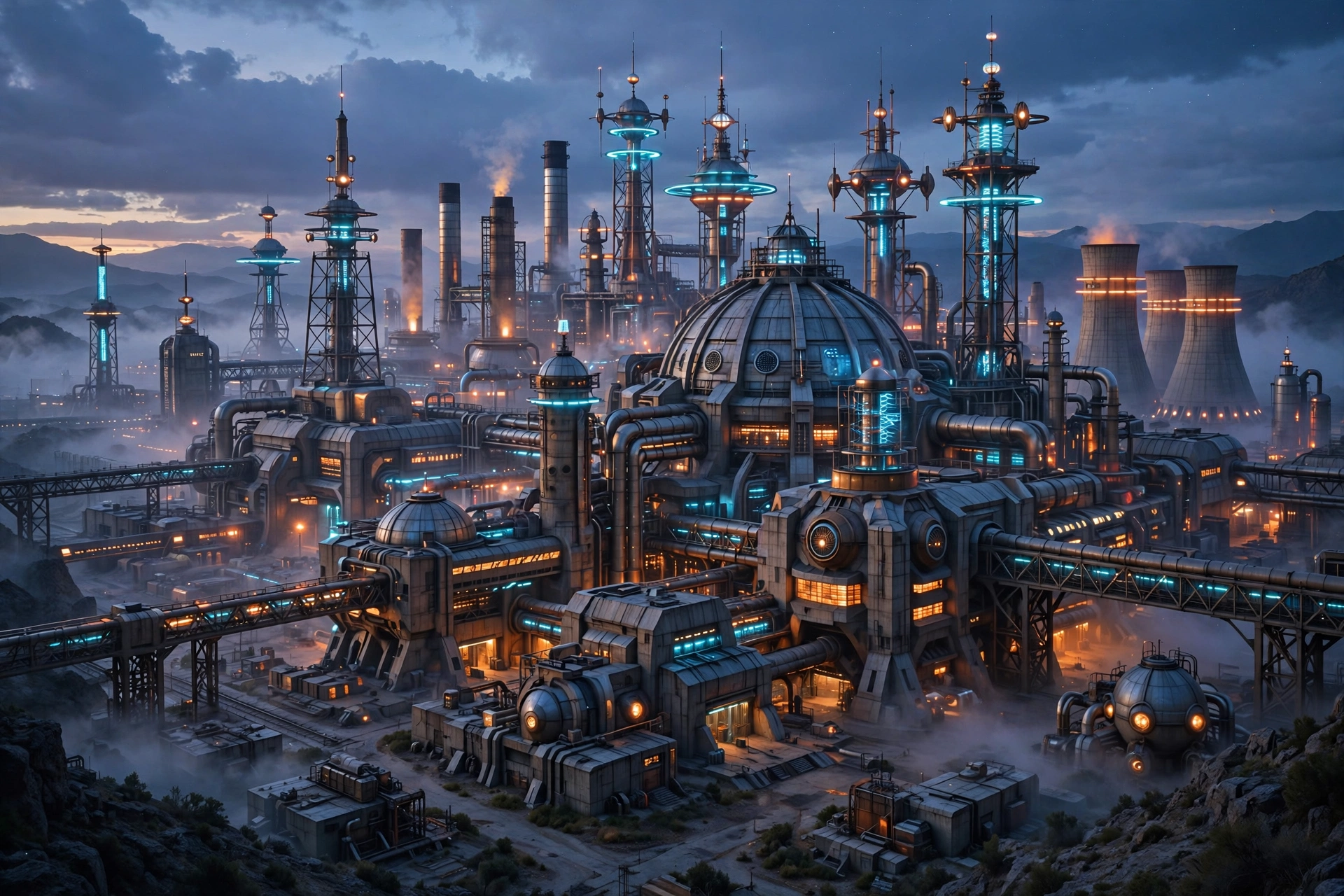
The game opens in Norcek, a research complex run by Norcek Industries. The visual language is retro-futuristic: mid-century institutional architecture housing impossible science. As the campaign progresses, the setting expands through laboratories and research sites — the Exotic Matter Laboratory, the Particle Accelerator Terminus, the R&D Headquarters, the Temporal Research Centre and its construction site, and eventually areas beyond the Rift (Theta Splice / Rift Zero). Those names come from the public trophy list, not from story leaks, and they are presented here as a map of scale, not as plot.
The key terms
These are the words the official materials use — learn them and you will parse every in-game conversation cleanly:
- The Explorers — you and your partner. Orange and red suits, walkie-talkies, asymmetric abilities.
- The Director — the calm voice guiding you. In the We Were Here series, the guiding voice is never just a tutorial.
- Norcek Industries — the organization behind the facility.
- Walkie-talkies — your lifeline to each other and to the Director. The series' signature object.
- Asymmetric abilities — one Explorer carries a throwable cube, the other a grapple gun. Your tools differ, your views differ, and neither of you can finish alone.
Where Tomorrow fits in the series
Tomorrow is a standalone entry. You do not need to have played the earlier entries in the series to follow it. The series has an ongoing background — a long-running mystery about the setting and its inhabitants — and returning players will recognize threads and motifs. New players get a complete story that starts and ends here.
That said, the series rewards attention across entries. If you finish Tomorrow hungry for more, the earlier games are shorter (Forever runs about 10–12 hours against Tomorrow's ~15) and cheaper, and they train exactly the communication skills Tomorrow demands. Playing order among the earlier games matters less than simply having played one.
The spoiler boundary of this site
This is worth stating explicitly because guide sites usually fail at it:
- Premise-level information (this page): safe. It covers what the official announcement covers.
- Area names from the trophy list (the trophies guide and walkthrough hub): these reveal the campaign's geography but not its story. We consider area names fair game; plot content is not.
- Puzzle solutions: never published, anywhere on this site. See the stuck-help guide for how we help without spoiling.
- Story discussion: this site does not publish plot analysis, ending discussion, or lore theories. If you want those, the community forums are the right place — after you finish.
If you are browsing this site mid-campaign, stick to the stuck-help guide and the trophies guide. The walkthrough hub's area list reveals where the campaign goes — that is geography, not story, but skip it if you want total blindness.
The series' recurring ideas (still spoiler-free)
Across the We Were Here games, a few design ideas repeat, and Tomorrow is built on all of them:
- Asymmetric information as the core mechanic. You and your partner never see the same thing. The game is not testing your reflexes; it is testing whether two people can build a shared understanding from two half-pictures.
- The walkie-talkie as a relationship. In every entry, the radio is how you reach your partner and how the guiding voice reaches you. Pay attention to who is talking and when — the series has always used its voices deliberately.
- The facility as a character. Norcek Industries' complex is not a backdrop; it is the thing you are investigating. Documents, recordings and environmental details accumulate into a picture of what happened here. Read everything.
- Two abilities, one solution. The throwable cube and the grapple gun are not just tools — they are the reason two specific people must solve each puzzle together. When you are stuck, the answer is almost always in the interaction between the two roles, not in either role alone.
None of this spoils anything: it is the series' grammar, visible in every trailer and announcement.
Tone and what to expect
The series trades in slow-burn mystery rather than action: environmental storytelling, documents and recordings to find, and a setting that gets stranger the deeper you go. Tomorrow is the longest entry by the developers' own numbers, which suggests the most room the series has ever had for that slow burn. Expect to spend as much time talking with your partner about what things mean as you spend solving puzzles — that conversation is the game working as intended.
For practical preparation — session planning, voice setup, the two-copy requirement — see Beginner Tips and the FAQ.